Stone and metal
Which metal suits which gemstone.
Eight classic pairings of a centre stone and a metal, each rendered on the same six-prong solitaire, with the figures that set them apart: how the stone bends light, what it weighs against a diamond, and what the metal weighs.
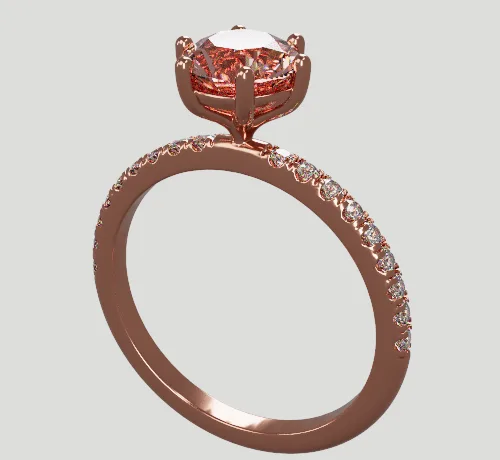
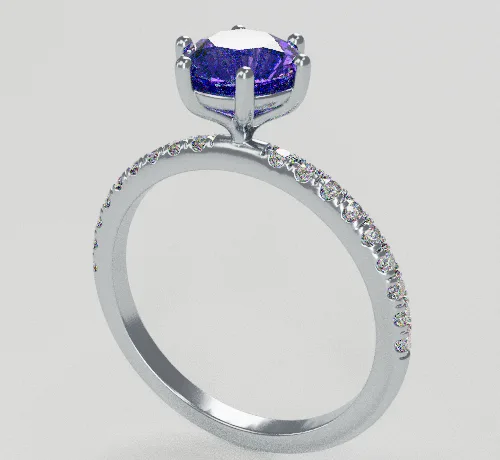
Eight classic gemstone and metal pairings rendered in Jart on the same six-prong solitaire: diamond in platinum, sapphire and aquamarine in white gold, emerald, ruby and amethyst in yellow gold, morganite in rose gold and tanzanite in platinum. Warm metals suit warm stones and white metals cool ones; each pairing lists the stone's refractive index, its weight against a same-size diamond and the metal's density and band weight.
8 pairings, rendered
The studio's sample solitaire with diamond shoulder stones, rendered in Jart's Render mode under the Softbox lighting. Only the centre stone and the metal change from one image to the next.
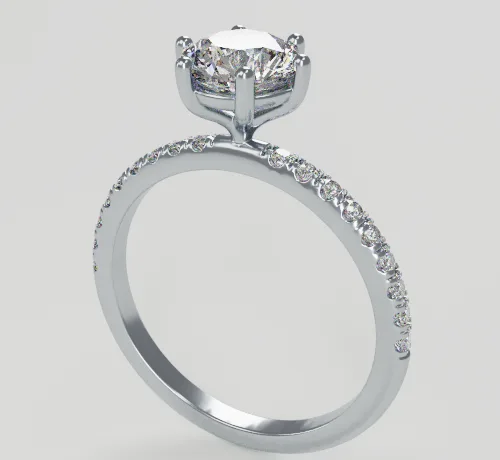
Diamond in platinum
The classic bridal pairing. A white metal adds no colour of its own, so a colourless diamond reads as white as it is, and platinum's weight and resistance to wear make it the usual metal for a six-prong head holding a valuable stone.
RI 2.417 · dispersion 0.025 · Mohs 10
Platinum 950 · 21.4 g/cm³
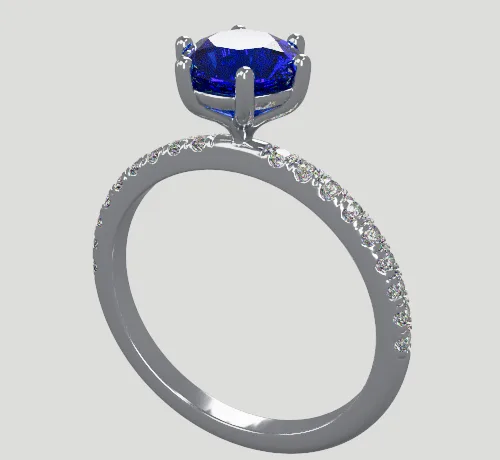
Sapphire in white gold
Blue stays cool and saturated next to a white metal. White gold sets off the blue without warming it, which is why most blue sapphire engagement rings are white; in yellow gold the same stone reads slightly greener.
RI 1.77 · dispersion 0.011 · Mohs 9
18k white gold · 15.5 g/cm³
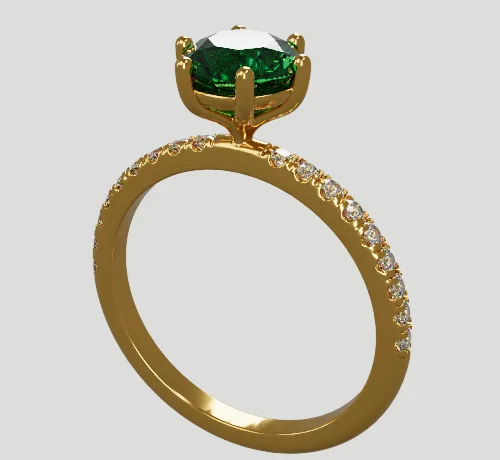
Emerald in yellow gold
Yellow gold warms emerald's green and is the pairing of much historic emerald jewellery. In a pale emerald yellow claws can tint the stone, so some jewellers set it in white claws on a yellow band.
RI 1.58 · dispersion 0.009 · Mohs 7.5–8
18k yellow gold · 15.5 g/cm³
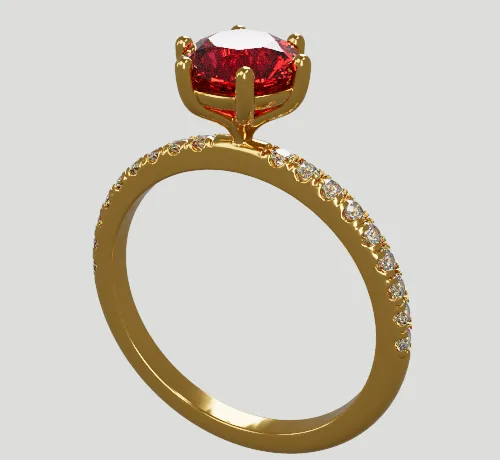
Ruby in yellow gold
Warm metal deepens a warm stone: yellow gold makes ruby's red look richer, a long tradition in Asian and antique jewellery. The same ruby in a white metal looks cooler and pinker.
RI 1.77 · dispersion 0.011 · Mohs 9
18k yellow gold · 15.5 g/cm³
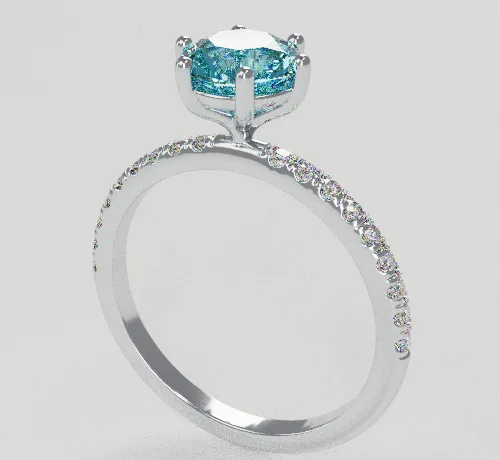
Aquamarine in white gold
Aquamarine's pale blue builds slowly with depth, so the metal behind it shows through. White gold keeps it crisp and icy; yellow gold reflected through a pale stone can push it toward green.
RI 1.58 · dispersion 0.009 · Mohs 7.5–8
18k white gold · 15.5 g/cm³
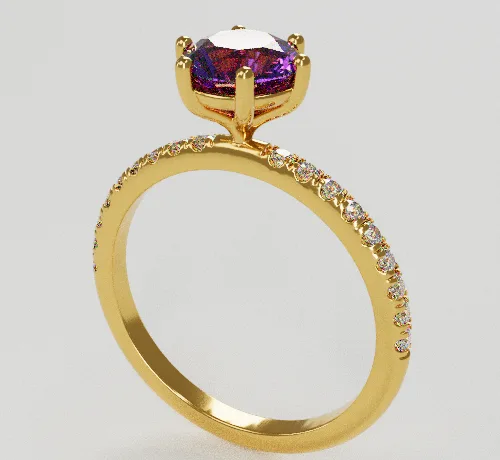
Amethyst in yellow gold
Purple and yellow are complementary colours, so yellow gold makes amethyst look its most saturated. A favourite pairing of Victorian and Art Nouveau jewellery.
RI 1.55 · dispersion 0.008 · Mohs 7
18k yellow gold · 15.5 g/cm³
The pairings compared
Weight against diamond is what a stone of the same size and cut weighs in carats compared with a diamond, from the specific gravities. Band is a plain band 17.3 mm inside, 4 mm wide and 1.8 mm thick (432 mm³) in that metal, before casting loss.
| Pairing | Refractive index | Specific gravity | Weight against diamond | Hallmark | Metal density | Band |
|---|---|---|---|---|---|---|
| Diamond in platinum | 2.417 | 3.52 | the same | PT950 | 21.4 g/cm³ | 9.2 g |
| Sapphire in white gold | 1.77 | 4.00 | +14% | 750 | 15.5 g/cm³ | 6.7 g |
| Emerald in yellow gold | 1.58 | 2.72 | −23% | 750 | 15.5 g/cm³ | 6.7 g |
| Ruby in yellow gold | 1.77 | 4.00 | +14% | 750 | 15.5 g/cm³ | 6.7 g |
| Morganite in rose gold | 1.58 | 2.72 | −23% | 750 | 15.2 g/cm³ | 6.6 g |
| Tanzanite in platinum | 1.694 | 3.35 | −5% | PT950 | 21.4 g/cm³ | 9.2 g |
| Aquamarine in white gold | 1.58 | 2.72 | −23% | 750 | 15.5 g/cm³ | 6.7 g |
| Amethyst in yellow gold | 1.55 | 2.65 | −25% | 750 | 15.5 g/cm³ | 6.7 g |
Should a coloured stone go in white or yellow metal?
Match warm with warm and cool with cool. Polished metal reflects its own colour into and around a stone, so yellow and rose gold warm reds, greens, purples and peach tones, while white gold and platinum keep blues and violets cool and colourless diamonds white. A pale stone shows the metal most, because more light passes through it to the setting and back.
Does the metal change what the ring weighs?
Yes, by its density. The same band, 17.3 mm inside, 4 mm wide and 1.8 mm thick, weighs 6.7 g in 18k yellow gold and 9.2 g in Platinum 950, about 38% more. The metal weight calculator works it out for any size.
Is a coloured stone heavier than a diamond of the same size?
It depends on the stone's specific gravity. A sapphire (4.00) cut to the same size as a diamond (3.52) weighs about 14% more in carats; an emerald (2.72) about 23% less. So a 1 ct sapphire looks smaller than a 1 ct diamond: compare stones by millimetres, not carats.
Render your own stone and metal pairing.
Open a 3DM, STL or GLB file, or a sample ring, choose the stone and the metal, and render it photoreal in your browser. No account needed.